From Sink Trap to Shoreline: How Drainage Works on Ilha Comprida
When water drains slowly from a kitchen sink on Ilha Comprida, the problem may seem purely domestic. In reality, that sink trap is the first link in a chain that runs through the house, under the street, and eventually toward the shoreline of a barrier island. Understanding this chain is the fastest way to see why drainage on Ilha Comprida does not behave like drainage in a mainland city — and why calling a desentupidora Ilha Comprida SP early often prevents a small clog from becoming a street-level problem.
This primer moves outward from the plumbing fixture to the municipal network, explaining each layer in plain language. It is written for newcomers, new homeowners, and anyone who wants a mental map of how wastewater leaves a building on an island municipality.
The sink trap: where every drainage story begins
Under most sinks sits a curved pipe called a trap. Its job is simple but essential: it holds a small amount of water that seals the pipe and blocks sewer gases from entering the room. When people say a drain smells bad, the trap is usually the first suspect — either it has dried out or debris has displaced the water seal.
Traps also catch grease, soap residue, hair, and food particles. Over time these materials coat the inside of the pipe and narrow the passage. A sink that gurgles or drains slowly is often announcing that the trap and the branch line behind it are partially blocked.
Why traps matter more in coastal homes
Houses that sit empty for part of the year — common on an island with seasonal occupancy — can lose their trap seal through evaporation. The result is not just odor but also a path for insects and gas. Refilling traps periodically is a basic maintenance habit that prevents bigger complaints later.
Beyond the trap, the branch line carries water to a vertical stack or directly to the building’s main drain. Each joint and bend is a potential collection point for grease and solids. Slow drainage is a warning, not a nuisance, and ignoring it usually shifts the blockage deeper into the system.
Inside the building: branch lines, stacks, and the main drain
Every fixture in a house connects to a branch line, which joins a stack or a horizontal run that leads to the building’s main drain. This internal network is where most residential clogs begin. Kitchen grease, bathroom hair, and laundry lint accumulate at low points and in pipes with little slope.
Older buildings may have cast iron or galvanized pipes that corrode internally, creating rough surfaces that trap debris. Newer PVC pipes are smoother but can still clog when inappropriate items are flushed or poured down the drain.
Signs that the problem is inside, not outside
When only one fixture is slow, the blockage is usually local — a trap or branch line. When multiple fixtures back up at once, or when water rises in a floor drain after using a sink, the main drain is likely involved. That distinction matters because it determines whether a plunger, a drain snake, or a professional service is the right next step.
For persistent backups, a trained team can inspect and clear the line without damaging fittings. This is where a desentupidora Ilha Comprida becomes useful: the work moves from guesswork to a systematic check of the building’s internal network.
The property line: inspection boxes, septic systems, and private responsibility
At the edge of the property, wastewater passes through an inspection box or a septic system before entering the public network. On Ilha Comprida, as in many coastal municipalities, not every property connects to a centralized sewer. Some rely on septic tanks and drain fields, which changes the maintenance routine entirely.
Septic systems separate solids from liquids and release clarified effluent into the soil. When they are not pumped periodically, solids accumulate and migrate into the drain field, causing slow drains and surface pooling. Septic maintenance is a homeowner responsibility, and neglecting it can be far more expensive than routine pumping.
What the inspection box tells you
An inspection box is a small access chamber that lets a technician see whether a blockage is on the private side or the public side. If water backs up in the box when the house is used, the obstruction is likely between the building and the box. If the box itself is full and slow to empty, the problem may be downstream in the municipal line.
Knowing this boundary prevents unnecessary digging on private property and helps direct the right call. It also clarifies who is responsible for the repair — a detail that matters when a blockage affects several neighbors.
The municipal network: how island geography changes the rules
Once wastewater leaves private property, it enters the municipal collection system. On a barrier island, that system faces conditions a mainland city rarely encounters. The water table is shallow, the soil is sandy, and the shoreline is never far away.
These factors affect how pipes are laid, how they are ventilated, and how quickly they can be inspected or repaired. Sandy soil can shift, and a high water table can infiltrate pipes, adding volume that the system was not designed to handle during heavy rain.
Infiltration and inflow
Infiltration is groundwater entering pipes through cracks and joints. Inflow is stormwater entering through illegal connections or open covers. Both increase the load on the network and can cause backups far from the original defect. On an island, where rain and tide interact, these effects are amplified.
This is why a blockage that seems local can have a regional cause. A technician who understands the island’s hydrology can often tell whether a backup is a private clog or a symptom of a surcharged municipal line.
Where the water goes: treatment, outfall, and environmental care
Collected wastewater travels to a treatment plant or, in some older arrangements, to an outfall. Treatment removes solids and reduces organic load before the water is returned to the environment. On an island, the receiving environment is often sensitive: mangroves, beaches, and estuaries that support fishing and tourism.
Improper disposal — such as dumping grease or connecting storm drains to sanitary lines — undermines this system. What goes down the drain eventually reaches the shoreline, and that connection is more direct on an island than in a large inland city.
Why emergency response matters here
When a sewer backs up into a home or a commercial kitchen, the priority is to stop the overflow and clear the line quickly. Delays can lead to property damage, health risks, and environmental contamination. This is the context in which a desentupidora em Ilha Comprida SP provides value: rapid response, proper equipment, and disposal practices that respect local regulations.
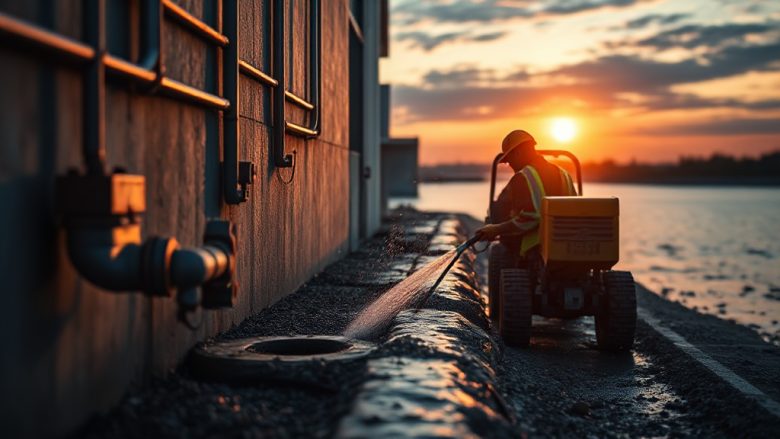
Hidrojateamento — high-pressure water jetting — is often used for heavier blockages because it scours the pipe walls rather than simply punching a hole through the clog. For grease-heavy lines and roots, this method restores full flow more reliably than a cable alone.
Seasonal pressure: why drainage problems cluster in summer
Ilha Comprida receives a large seasonal population. During peak periods, the volume of wastewater rises sharply while the network’s capacity stays fixed. Restaurants, guesthouses, and rental homes all add load at the same time.
This seasonal surge explains why clogs that were tolerable in low season suddenly become emergencies. Grease that accumulated quietly for months reaches a tipping point when usage doubles. Preventive maintenance before peak season is cheaper than emergency repair during it.
A simple seasonal checklist
Before the high season, homeowners can reduce risk by having grease traps cleaned, checking inspection boxes, and scheduling a line inspection if the property has a history of backups. Commercial kitchens should confirm that their grease interceptor is sized for peak volume.
These steps do not eliminate every problem, but they shift the odds. Most emergency calls could have been avoided with a routine check a few weeks earlier.
Glossary of drainage terms used in this primer
The following terms appear throughout discussions of drainage on Ilha Comprida. They are listed here as a reference for readers who want to follow technical conversations or understand a service report.
- Trap — the curved pipe under a fixture that holds a water seal against sewer gas.
- Branch line — the pipe connecting a fixture to the main drain or stack.
- Stack — the vertical pipe that carries wastewater and vents gases.
- Main drain — the primary horizontal line that carries wastewater out of the building.
- Inspection box — an access chamber at the property line used to locate blockages.
- Septic system — an on-site treatment arrangement with a tank and drain field.
- Infiltration — groundwater entering pipes through defects.
- Inflow — stormwater entering the sanitary system through improper connections.
- Hidrojateamento — high-pressure water jetting used to scour pipe walls.
- Surcharge — a condition where the network is full and water backs up.
With this vocabulary, a slow sink no longer looks like an isolated annoyance. It is the first visible sign of a system that runs from the trap under the cabinet to the shoreline beyond the street — a system that rewards attention and punishes neglect.